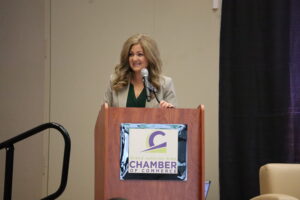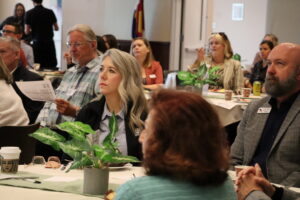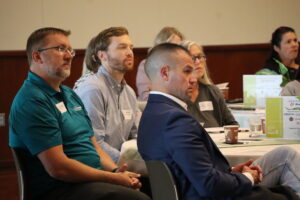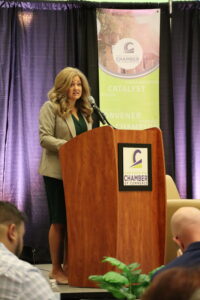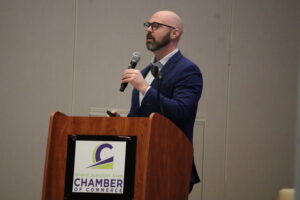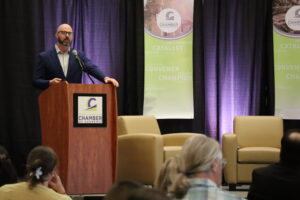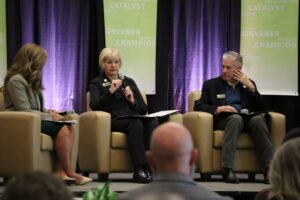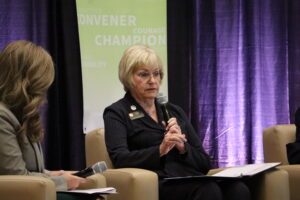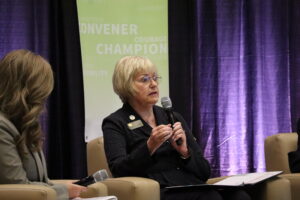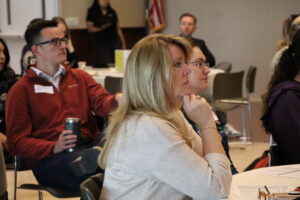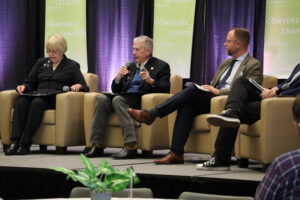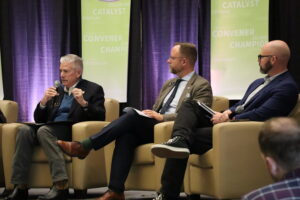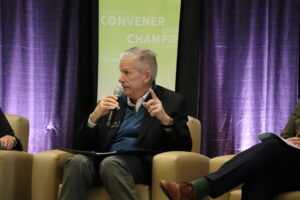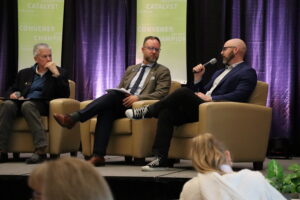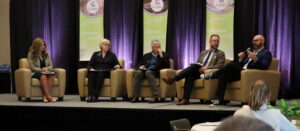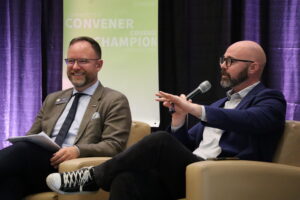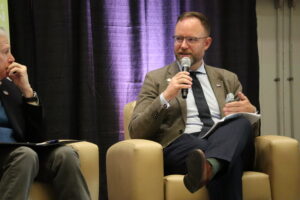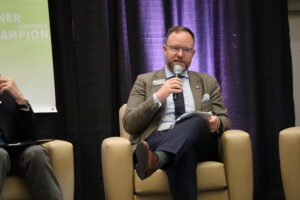
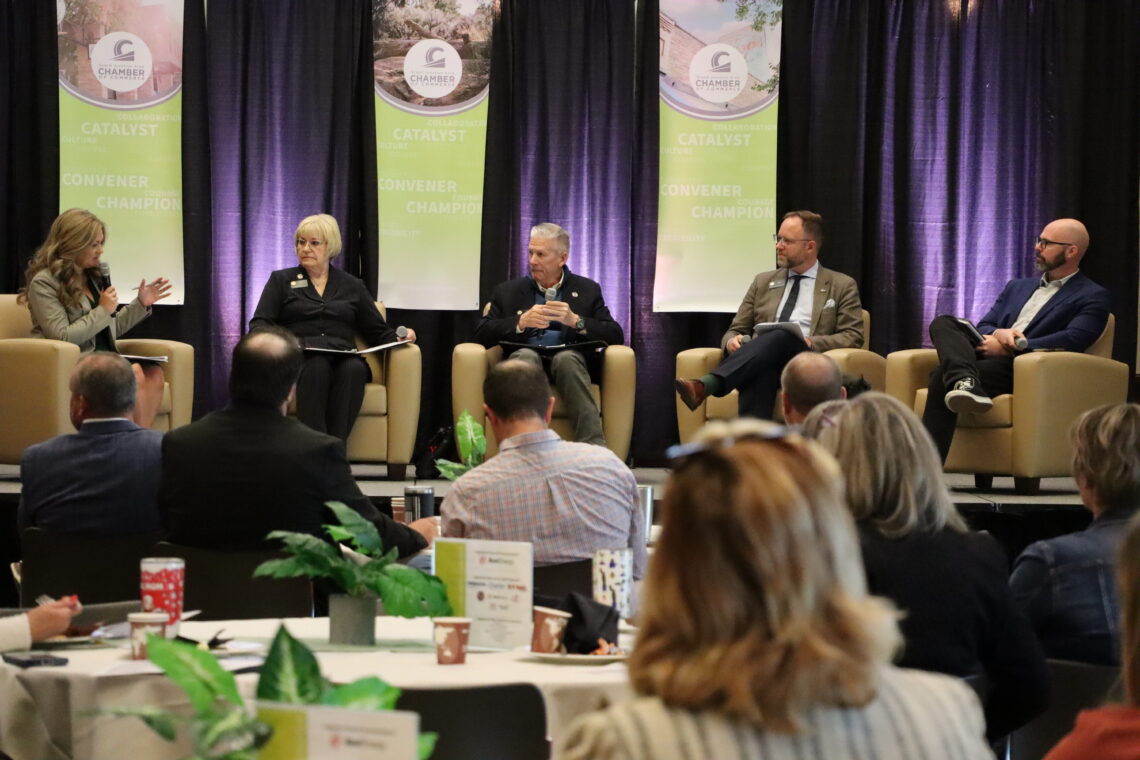
Business leaders from across Mesa County gathered this week for the Grand Junction Area Chamber of Commerce Legislative Wrap Up Breakfast, where lawmakers, policy experts, and employers took a candid look at the 2026 legislative session and the growing concerns surrounding Colorado’s economic competitiveness.
The event featured Janice Rich, Rick Taggart, Matt Soper, and DJ Summers of the Common Sense Institute. Throughout the morning, speakers repeatedly returned to one central theme: Colorado businesses are increasingly concerned about affordability, regulation, taxes, and the long-term direction of the state’s economy.
“Our message this year was simple: do no harm,” said Candace Carnahan, President and CEO of the Chamber. “At a time when employers are already navigating rising costs, workforce shortages, housing challenges, and affordability pressures, we urged lawmakers to avoid policies that make it harder for businesses to invest, hire, and grow.”
That principle became a guiding framework for the Chamber’s advocacy efforts throughout the 2026 legislative session and was formally added to the organization’s legislative guidelines ahead of the session. Chamber Board Chair Brad McCloud echoed the importance of that work during his opening remarks, emphasizing that advocacy consistently remains one of the top reasons businesses choose to invest in the Chamber.
“When we ask our members why they invest in the Chamber, advocacy consistently rises to the top,” McCloud said. “Businesses understand that policy decisions made under the Gold Dome directly impact their ability to operate and grow.”
McCloud also recognized the Chamber’s Governmental Affairs Committee, which met every other week throughout the session to review legislation, discuss impacts, and help shape the Chamber’s positions on key policy proposals.
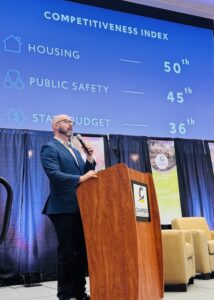
Summers then delivered a sobering economic overview, highlighting recent research from the Common Sense Institute showing Colorado’s declining economic momentum relative to other states. According to CSI’s analysis, Colorado has fallen from 10th to 17th nationally in overall economic competitiveness over the past decade, while housing affordability, domestic migration, and business formation trends continue moving in the wrong direction.
“We cannot attract new businesses if people don’t have a place to stay and they don’t have any quality of life because most of their paycheck goes toward accommodations,” Summers said while discussing Colorado’s ongoing housing challenges.
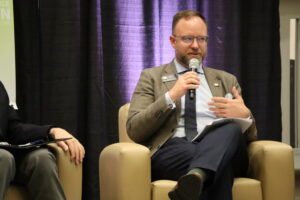
The conversation that followed focused heavily on the intersection between those economic trends and legislation debated during the 2026 session. Lawmakers described a session dominated by budget constraints, increasing pressure for new revenue sources, and increasingly complex legislation. Representative Taggart, who serves on the Joint Budget Committee, warned that Colorado’s Medicaid spending trajectory remains unsustainable and could eventually crowd out investments in higher education and K-12 funding if left unaddressed. Representative Soper also highlighted concerns surrounding increasingly complicated legislation and shortened timelines for public review, noting that some proposals moved through the process with little opportunity for stakeholders to fully understand their impacts.
Several bills drew significant discussion during the event, including changes to Colorado’s Labor Peace Act, workplace safety proposals, artificial intelligence and pricing restrictions, agricultural overtime policy, TABOR refund proposals, and broader tax and fee discussions. At the same time, legislators and Chamber leaders stressed that advocacy success cannot simply be measured by whether bills pass or fail.
Carnahan noted that much of the Chamber’s work involved collaborating with lawmakers and statewide partners to reshape legislation after introduction in order to reduce unintended consequences for employers.
“Some of the biggest successes never show up on a legislative scorecard,” Carnahan said. “A bill may still pass, but through negotiations and amendments, it no longer poses the same level of concern it originally did.”
One example highlighted during the conversation was the debate surrounding agricultural overtime standards, where Western Colorado chambers, producers, and industry partners worked together to educate lawmakers about the realities facing rural employers and agricultural operations. The discussion also touched on the growing use of fees and fiscal workarounds at the state level, as well as the cumulative impact legislation can have on employers already navigating affordability pressures.
Attendees also received the Chamber’s 2026 legislative scorecard, outlining key bills monitored throughout the session and the Chamber’s positions on legislation impacting business competitiveness, workforce, taxation, housing, healthcare, regulation, and economic growth. The scorecard reflects not only bills the Chamber supported or opposed, but also the significant behind-the-scenes work that occurred throughout the session to amend and reshape legislation as it moved through the process.
Summers concluded the conversation with a broader warning about the direction of Colorado’s business climate, arguing that long-term competitiveness will ultimately depend on how policymakers approach regulation and economic growth moving forward.
“The single biggest thing that needs to change is the attitude toward business regulation,” Summers said. “That is the thing that will restore Colorado’s place as one of the top-performing states.”